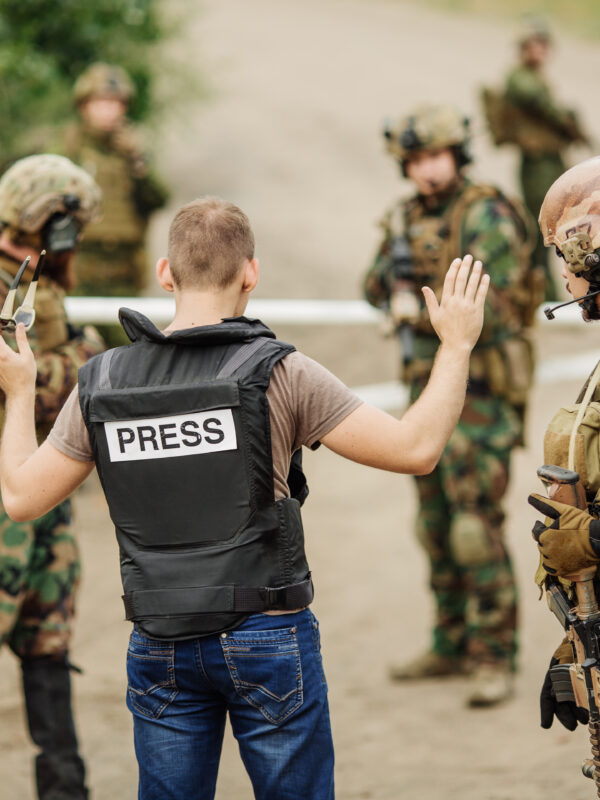
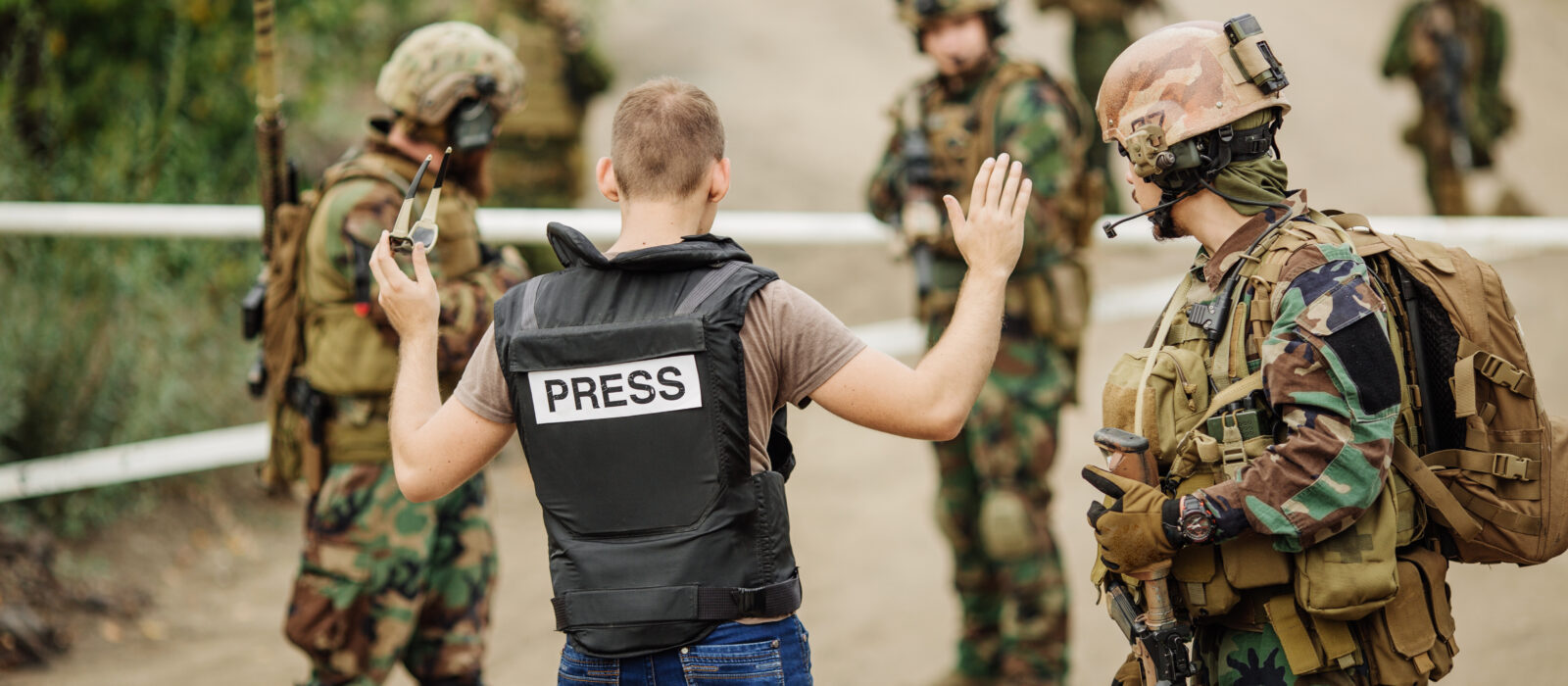
“Too frequently journalists engaged in dangerous professional missions in areas of armed conflict do not enjoy adequate protection” noted the Diplomatic Conference which drafted the Additional Protocols to the Geneva Conventions.That was 1975. Since then, the media have deeply evolved and so has the technology of war. What has not improved, however, is the frequency of journalists killed, injured or arbitrarily detained while reporting from war zones. These incidents not only affect the victims but also limit prosecutors and judges’ access to credible evidence on war crimes and undermine the availability of information, which is necessary for a public debate.
This course examines the norms of international humanitarian law relevant to the protection of journalists. It also addresses the legal challenges for their protection on the ground, including some arguments that have been put forward by parties to conflicts to justify attacks against journalists, media facilities and equipment. Finally, the course will present the ongoing initiatives to strengthen the legal protection of journalists in armed conflicts, as well as the potentials and the problems related to the use of artificial intelligence by investigative journalists to report on war crimes, when security threats hamper their access to conflict zones.
A downloadable flyer is available here.
By the end of the course, participants will be able to:
- Analyse the legal framework on the protection of journalists and media professionals under international humanitarian law.
- Understand the existing legal challenges that limit the effective protection of journalists.
- Critically assess the way access to information affects the delivery of justice for war crimes and the public debate around armed conflicts.
- Explore the legal issues and opportunities surrounding the use of AI by investigative journalist to report on war crimes without access to the conflict zones.
Paola Forgione has worked for the International Committee of the Red Cross (ICRC) for over a decade. She was protection delegate in Gaza, El Salvador, Zimbabwe, Namibia and the Ivory Coast. During her missions, she monitored the treatment of people in detention, documented attacks against healthcare workers and supported families of missing people in the search of their loved ones.
She is currently Legal Adviser at the ICRC in Geneva, where she focuses on accountability for war crimes and on transitional justice. She advices states on domestic norms that they should adopt to translate international humanitarian law obligations into practice, and she delivers trainings on war crimes to judges, prosecutors and investigators of domestic and international accountability mechanisms.
She has been admitted to the Bar in Milan, and she holds a PhD in International Justice and Human Rights from the University of Pavia in Italy. She held visiting positions at the Australian National University and at King’s College London.
- Monday 13 July, 12:00 to 13.00 – Introduction
- Tuesday 14 July, 12:00 to 14:00
- Wednesday 15 July, 12:00 to 14:00
- Thursday 16 July, 12:00 to 14:00
- Friday 17 July, 12:00 to 14:00
- Monday 20 July, 12:00 to 14:00
- Tuesday 21 July, 12:00 to 14:00
- Wednesday 22 July, 12:00 to 14:00
Please send an email to digital.academy@geneva-academy.ch with a CV and a motivation letter letter expressing your interest in the specific course.
Selected applicants will receive a confirmation of acceptance. To secure their place, accepted participants are required to pay a non-refundable deposit of CHF 100.
Please note that this course is subject to a minimum of 10 participants. If this minimum is not reached two weeks prior to the start date, this course will not be delivered and all registered participants will receive a full refund of the deposit. Places are limited to 25 participants, and therefore early application is strongly encouraged.
CHF 950.
A discount of CHF 100 is available for students and alumni of the Academy, UNIGE, IHEID, and individuals who have previously participated in our trainings or educational activities.