

Our 2026 Summer Intensive Courses have now ended. Stay tuned, spring online courses for 2027 will be announced soon.
These short, academically rigorous online programmes offered participants the opportunity to deepen their expertise in international humanitarian law and human rights through focused, intensive learning. Delivered in small, highly select groups, each course provided close interaction with experts and meaningful engagement with peers. Combining flexibility with academic excellence, the courses were designed to fit alongside full-time professional commitments. Postgraduate participants who successfully completed a course also earned 3 ECTS credits.*
Thank you to everyone who joined us this summer for this rich and engaging programme, which featured the following courses:

Accountability for Atrocity Crimes

Human Rights and AI Systems
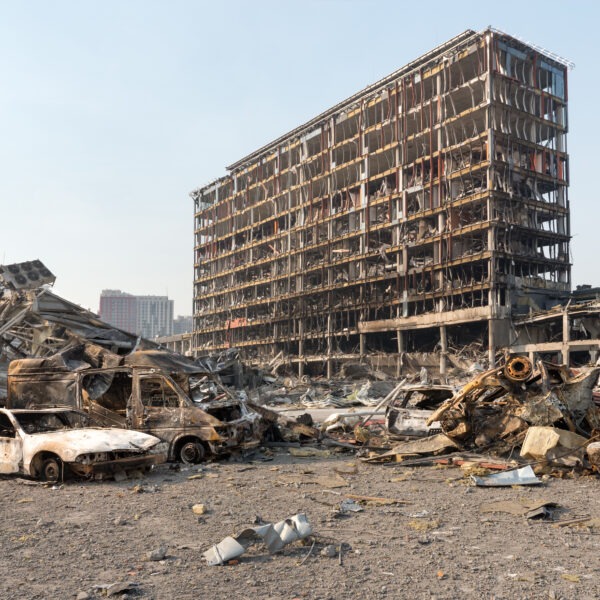
Weapons Law Fundamentals
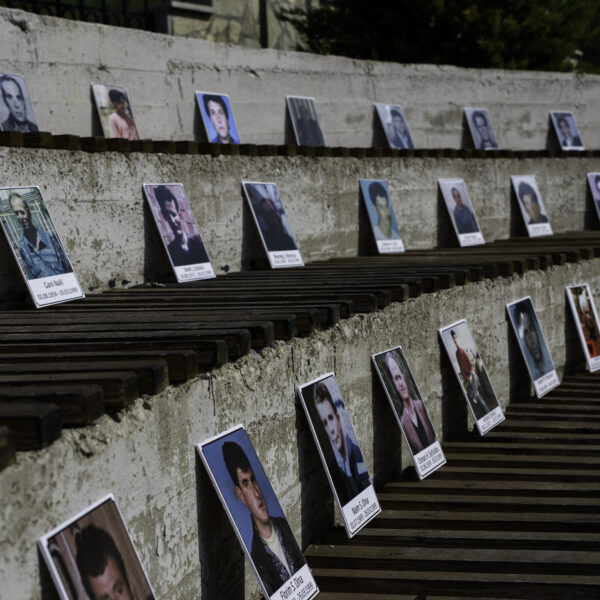
Transitional Justice and Structural Violence: Making Connections

Frontiers in International Human Rights Law

Contemporary Challenges to the Classification of Armed Conflicts
Want to stay informed? Please register through the form below to receive updates on the Geneva Academy’s academic programmes and activities.
*Postgraduate participants are those who have completed a Bachelor’s degree in Law or an equivalent degree in a related discipline, such as International Relations, Political Science or a similar field.
These short, academically rigorous online programmes provide participants with the opportunity to deepen their expertise in international humanitarian law and human rights through focused and rigorous learning. Delivered in small, highly select groups, each course ensures close interaction with experts and meaningful engagement with peers. Combining flexibility with academic excellence, the courses are tailored to fit alongside full-time professional commitments and post-graduate participants who successfully complete a course can earn 3 ECTS credits.
Frontiers in International Human Rights Law
Contemporary Challenges to the Classification of Armed Conflicts
Each summer intensive course represents a total workload of 75 hours.
- The 15 hours of live online teaching are divided in 8 sessions (1-hour introductory session and 7 interactive sessions of 2 hours each).
- The 60 hours of individual work include preparation for sessions, readings and assignments and preparation for the final assessment.
Class size
Courses are intentionally limited to a maximum of 25 participants, ensuring a niche, interactive, and high-quality learning environment with direct access to instructors.
Schedule
Live sessions take place online from 12:00 to 14:00 (CET), making them accessible during lunch breaks and compatible with multiple time zones. Sessions will not be recorded.
Teaching approach
- Interactive and practice-oriented
- Led by leading academics and practitioners
- Designed to present both theory and applied learning
Assessment
Evaluation is composed of class participation and oral evaluation.
Certification
Upon successful completion of the course, participants receive a certificate issued by the Geneva Academy.
Fee
CHF 950 per course.
A discount of CHF 100 is available for students and alumni of the Academy, UNIGE, IHEID, and individuals who have previously participated in our trainings or educational activities.
The fee for one course will be refunded for anyone who is then accepted into our Executive Master - MAS. Read more >

Co-President of the Geneva Academy of International Humanitarian Law and Human Rights and a Full Professor of International Law at the Geneva Graduate Institute

Professor at the European University Institute (EUI), Florence
Senior Researcher, Head of Scientific Projects

Independent Expert on Transitional Justice, Human Rights and the Rule of Law

Postdoctoral Researcher at the Faculty of Law of the University of Geneva

Research Director of IRSEM, Visiting Professor at Laval University and at Paris-Panthéon-Assas
To apply, please send an email to digital.academy@geneva-academy.ch including:
- Your CV
- A motivation letter expressing your interest in the specific course
Selected applicants will receive a confirmation of acceptance.
To secure their place, accepted participants are required to pay a non-refundable deposit of CHF 100.
Please note that each course is subject to a minimum of 10 participants. If this minimum is not reached two weeks prior to the start date, the course will not be delivered and all registered participants will receive a full refund of the deposit.
Places are strictly limited to 25 participants per course, and early application is strongly encouraged.
For any assistance or further information, dedicated project managers are available to support participants throughout the programme:

My experience with the professors at the Academy was outstanding. They bring a wealth of expertise and real-world experience to the classroom and I truly appreciated their understanding of the balance we, as students, must maintain between work and studies.
Stoyan Karastoyanov
Chief Expert, Ministry of Defence of the Republic of Bulgaria